
In early 2026, Taiwan will officially enter a super-aged society, with the alarm bells of dementia ringing in its ears. According to a survey by the Ministry of Health and Welfare, the current prevalence of dementia among people aged 65 and above in Taiwan is 7.99%, with approximately 350,000 people suffering from dementia; among those aged 90 and above, one in three suffers from dementia; and the number is projected to more than double to 690,000 by 2041, with the prevalence approaching 10%. This aging crisis is unfolding at an unprecedented speed.
However, humanity's efforts to combat dementia remain mired in a medical black hole, with no end in sight. Scholars estimate that over the past 20 years, global pharmaceutical companies have spent over $100 billion in the dementia research field, primarily developing small-molecule drugs through chemical synthesis or large-molecule biologics, still hoping for a major breakthrough.
Now, a Taiwanese company is taking a different approach, focusing on herbal medicines in hopes of achieving a new breakthrough.
Botai Biopharmaceutical Co., Ltd. uses locally grown black beans in Taiwan, combined with patented technology, to refine them into herbal medicines through a process akin to "molecular gastronomy." They are attempting to build an immovable "Taiwanese fortress," igniting a new dawn outside the traditional dementia drug development path, hoping to protect the dignity of families affected by dementia and let the world see Taiwan.
The history of drug development is full of dramatic twists and turns, and Botai Biomedical's foray into the field of dementia was an unexpected accident. The story began in 2002 with Botai's founder, Zhu Yihong, who came from a family of traditional Chinese medicine practitioners. With his profound family knowledge, he selected a specific type of black bean from many varieties and used patented extraction technology to develop a topical drug for treating difficult-to-heal diabetic foot wounds.
Encountering a "beautiful accident" illuminates the glimmer of nerve repair.
After patients used the product, the research team unexpectedly discovered during their studies on vascular repair that damaged skin could regrow hair follicles. Tissue sections confirmed that black bean extract could activate stem cells and promote hair follicle regeneration.
Having discovered this potential to promote hair follicle regeneration, the company shifted its focus to developing hair care products, hoping to treat baldness and stimulate hair growth. Unexpectedly, users reported a series of unexpected "side effects," such as stable mood swings and significant improvement in chronic insomnia. Most surprisingly, one elderly person reported remembering a name they couldn't recall at all!
The team further deduced that if the product could improve sleep and memory, it should also help patients with dementia. Therefore, the team decided to formally extend its research into the field of dementia.
This series of unexpected effects is not inexplicable. Dr. Chi-Yu Wu, General Manager of Botai Biomedical, explains from a scientific perspective that human skin and brain originate from the same ectoderm during the embryonic stage, sharing similar immune signaling pathways and forming the so-called "gut-brain-cortex axis" physiological mechanism. Simply put, skin inflammation affects the brain; and chronic brain inflammation is an upstream cause of dementia.
Furthermore, scientific research has confirmed that the brain's lymphatic system clears toxins five times more efficiently during deep sleep than when awake. When black bean extract improves sleep quality and reduces inflammation, it creates a favorable environment for neural repair in the brain, thus potentially offering therapeutic benefits for dementia.
Based on this confidence, Botai applied for a Phase 2a clinical trial with the U.S. Food and Drug Administration (FDA) in 2016, studying 80 U.S. participants, and concluded the trial in 2019. The FDA subsequently provided several recommendations for improvement, laying the foundation for the next phase of research. From then on, Botai officially shifted its focus from the skincare market to become a breakthrough player in the global dementia research field.
Starting afresh after the pandemic, gathering diverse talents to ignite the flame of "unpolished gems".
However, shortly after the case was closed in 2019, the COVID-19 pandemic swept the globe, and research stalled for three years until a crucial turning point arrived in 2022. The current general manager, Dr. Chi-Yu Wu, a biochemistry PhD from National Yang-Ming University, joined the team. Leveraging his extensive experience in pharmaceutical R&D, he reassessed the company's potential. Subsequently, talent in new drug development, regulatory affairs, and market planning were successively brought in, and a team with the capability to compete on the international stage gradually took shape.
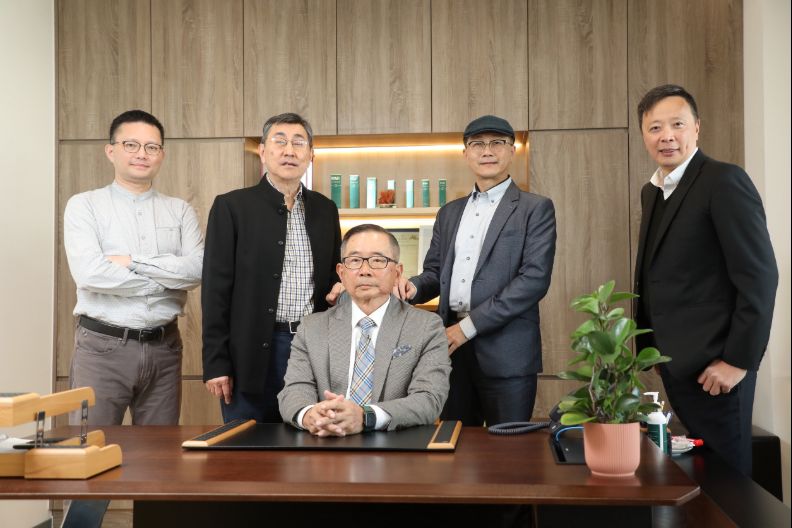 From left: Li Jianjun, Vice General Manager of Botai Biomedical; Zhang Chanrong, General Manager of the New Drug Division; Xu Yisheng, Chairman; Wu Qiyu, General Manager; and Shu Hanpeng, Vice General Manager. (Photo by Zhang Zhijie)
In January 2025, the company officially changed its name to Botanicure Biomedical. The English name Botanicure is derived from the Latin roots: Botani means plant and Cure means cure, signifying "healing with the power of plants," giving Taiwanese black beans a new scientific meaning.
Wu Chi-yu recalled that what impressed him most when he first encountered Botanicure was its "disruptive" R&D approach. While most new drugs start in the laboratory and gradually move to clinical trials, Botanicure took the opposite approach, discovering its potential to improve sleep, stabilize mood, and even restore memory from real feedback from tens of thousands of users of its skincare products. He described Botanicure as an unpolished "rough gem," and this belief drove the team to invest in long-term validation, hoping to bring a glimmer of hope to families with dementia worldwide.
Retail guru Hsu Yi-sheng crosses over into biomedicine, leading the way to "precision cornering".
The addition of Hsu Yi-sheng, the current chairman of Botai Biomedical, was also unexpected. Hsu Yi-sheng was initially optimistic about Botai's future, participating in the investment before being invited by the board to serve as chairman.
Meeting Hsu Yi-sheng in person, it's hard not to be drawn to his distinctive characteristics. A passionate motorcycle enthusiast, he's often jokingly said by friends that his veins don't flow with blood, but with "gasoline." In the late nights of 1990s Shanghai, if you heard the sound of a crane engine on the street, one of those cranes was almost certainly ridden by this rider.
However, his passion for motorcycles is only one side of Hsu Yi-sheng. His expertise lies in retail channels, with nearly 40 years of experience spanning from Taiwan's first Japanese-style supermarket to the world's largest hypermarket system. He also served as the general manager of RT-Mart's Shanghai headquarters, honing his solid management skills.
In 2013, cancer interrupted his career, but also marked the beginning of the second half of his life. After retiring from rehabilitation, he jokingly said that he upheld the spirit of not resting on his laurels and turned his life's passion into a career. He became the agent for Indian Motorcycle in the United States, and won the exclusive agency in Taiwan, Hong Kong and Macau. He even successfully entered the Presidential Office Military Police Motorcade. In the second year after becoming the agent, he became the number one seller in Asia.
For someone accustomed to racing against the wind, the 10- or 20-year marathon of biotechnology research and development might seem like an extreme personality trait; however, in Hsu Yi-sheng's eyes, the two are essentially the same. "Motorcycles aren't just about speed; mastering dynamic balance and cornering precision is the real key," he says. Every corner angle and every centimeter of braking force on the track relies not on feel, but on precise calculations of risk and benefit.
He brings this equestrian philosophy to Botai's governance. Instead of blindly pursuing speed, he breaks down the long R&D cycle into precise milestones, treating rigorous data verification as the braking system of a motorcycle. "In biotechnology R&D, failures must be discovered early," Hsu Yi-sheng emphasizes, stressing that decisively eliminating unfeasible paths allows precious resources to be concentrated on the most groundbreaking directions.
This vision and boldness are precisely the qualities the Botai team values. In June 2024, the board of directors strongly invited Hsu Yi-sheng to assume the position of chairman. In just one and a half years, he led Botai to double its staff from 33 to 77, and continued to accelerate its international journey in the field of Taiwanese black bean herbal medicine.
Herbal medicine is not traditional Chinese medicine; the secret of "molecular gastronomy" lies in the black beans of the countryside.
What exactly is the herbal medicine that Botai is investing in? Why does it have the potential to become a dark horse in the field of dementia drug development?
First, it's important to clarify that herbal medicine is not traditional Chinese medicine. Wu Chi-yu clarifies that herbal medicine is neither a traditional Chinese medicine ingredient nor a health food. In the definition of the US FDA, herbal medicine is essentially Western medicine, only its active ingredients are extracted from natural plants. From scientific purification and quality consistency, safety verification to efficacy in human clinical trials, every step must adhere to the same stringent standards as chemical drugs.
Botai's core research and development lies in those seemingly ordinary black beans found in the fields of central and southern Taiwan. Wu Chi-yu explains that this is far from ordinary agricultural processing; he likens Botai's patented extraction technology to "molecular gastronomy": just as top chefs break down ingredients to the molecular level and then recombine them, Botai also thoroughly breaks down black beans, precisely identifying the effective molecular groups within them. These processes elevate black beans from an everyday ingredient on the table to a cornerstone of precision medicine research.
However, unlike chemically synthesized drugs, the active ingredients in herbal medicines are highly susceptible to variations due to climate and origin. To address this, Botai employs strict control from the source, establishing agricultural standards and using high-resolution component mapping to identify each batch of raw materials. This ensures consistency between pharmaceutical quality and chemical manufacturing and control (CMC) standards, guaranteeing stable drug quality and batch-to-batch consistency.
In its research and development strategy, Botai utilizes the synergistic effects of specific molecular groups in black beans to create physiological conditions conducive to brain self-repair. This holistic approach to improving function, particularly the brain environment of dementia patients, is precisely what traditional chemically synthesized drugs struggle to achieve.
FDA regulations shift, botanical drugs poised for a breakthrough.
Currently, Botai has initiated a 300-person clinical study at four dementia medical centers in Taiwan. Chang Chan-jung, General Manager of New Drug R&D at Botai Biomedical, likens this to a "test launch of a rocket," aiming to accurately capture biomarkers and efficacy indicators of the investigational drug's clinical effects in subjects before formally entering the subsequent Phase 2b clinical trial. This precise data on whether there is improvement will enhance the success rate of future multinational, multi-center clinical trials internationally.
According to the latest Alzheimer's disease drug development guidance issued by the US FDA in 2024, there is a strong emphasis on advancing research and development towards earlier-stage treatments, moving beyond simply focusing on the deposition of brain proteins to prioritizing improvements in patients' actual symptoms and quality of life. This FDA guidance presents new opportunities for safe herbal drugs.
According to Botai's assessment, given the severe shortage of drugs for dementia, if the Phase 2b trial yields excellent results, they may apply for "accelerated approval" to directly obtain drug certification, thus becoming a beacon of hope for families worldwide to escape the predicament of dementia.
To make herbal medicine stand out in the world and become "Taiwan's calling card".
"This is an inviolable fortress of Taiwan!" Hsu Yi-sheng pointed out that the FDA's close link between herbal medicines and their place of origin means that once an FDA herbal medicine certificate is obtained, the geographical coordinates become a natural FDA certification defense. Botai's selection of central and southern Taiwan as its black bean GACP planting base not only establishes a unique land moat for Taiwan but also drives agricultural upgrading to "medical-agricultural integration," elevating Taiwanese land to a high-value international biomedical-grade land asset.
This "from land to pharmaceutical factory" model is poised for takeoff. Chang Chan-jung revealed that Botai will participate in the 2026 BIO International Convention – San Diego in June, where it will release key data from a 300-person clinical study in Taiwan. In addition to its existing topical formulations, it is also planning to develop oral and nasal spray formulations to provide more flexible delivery methods to better meet care needs.
"We want to be a respected company that solves societal pain points," Hsu Yi-sheng envisions, transforming dementia from a terrifying terminal illness into a controllable and manageable chronic disease. Botai's goal is to become the world's number one in herbal medicine, to become Taiwan's international biomedical brand, and to safeguard the health and dignity that everyone deserves in their later years.